
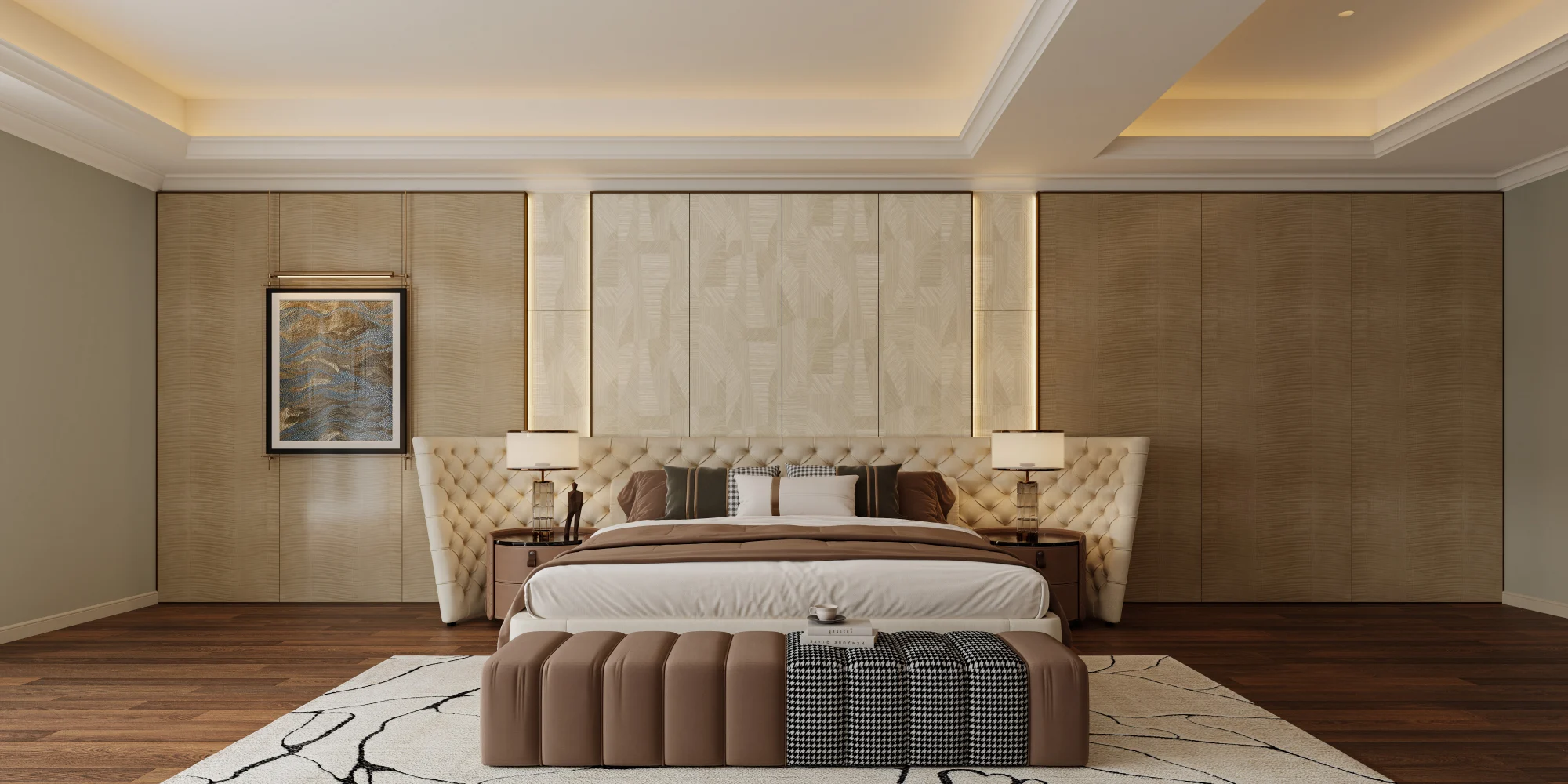
What Should You Consider When Designing a Walk-In Wardrobe for a Villa?
A walk-in wardrobe can be one of the most valuable private spaces in a luxury villa. Unlike a standard bedroom wardrobe, a well-designed walk-in wardrobe can accommodate clothing, shoes, handbags, accessories and personal items while creating a dedicated space for dressing and organization. For homeowners planning a Luxury Villa or Landed Property, the challenge is not simply to create more storage, but to design a wardrobe that balances capacity, accessibility, lighting, materials and overall interior aesthetics.
A successful Walk-In Wardrobe Design should therefore be planned together with the architecture and interior design of the villa. From the room layout and cabinet dimensions to lighting, hardware, finishes and internal organization, every detail can influence how the space looks and functions.
Why Is Walk-In Wardrobe Design Important for a Villa?
Large villas often provide enough space for a dedicated dressing room, making it possible to create a more personalized wardrobe system than a conventional built-in closet.
A walk-in wardrobe can be designed around the homeowner’s actual collection and lifestyle. Instead of using standard shelves and hanging rails, the space can include dedicated areas for long garments, shirts, trousers, shoes, handbags, watches, jewelry and seasonal clothing.
For a Landed Property Design, a walk-in wardrobe also provides an opportunity to extend the design language of the rest of the home. Natural wood veneer, architectural lighting, glass, metal and customized cabinetry can be coordinated with the bedroom, bathroom, doors and wall systems to create a cohesive private suite.
1. Start With the Layout and Available Space
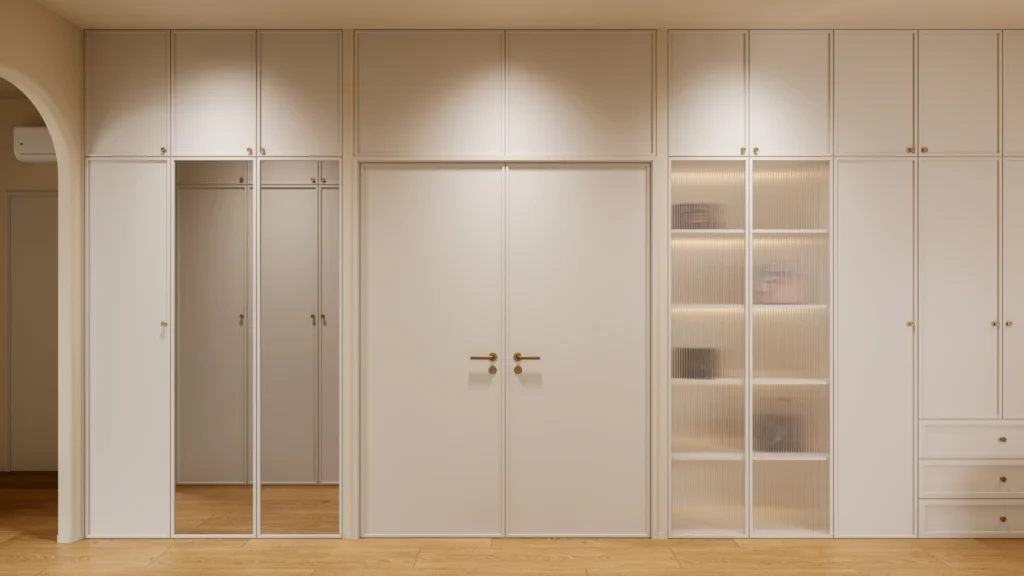
The first consideration when designing a villa walk-in wardrobe is the room itself. Before selecting cabinet styles or finishes, consider the available floor area, ceiling height, doors, windows, circulation routes and connection to the bedroom or bathroom.
A well-designed wardrobe should provide enough storage without making the room feel crowded. The central circulation area should remain comfortable, particularly when two people may need to use the wardrobe at the same time.
Depending on the room shape, different layouts can be considered, including single-wall, double-wall, L-shaped and island-based wardrobe systems. Larger villas may also accommodate a central wardrobe island, creating additional drawer storage while providing a visual focal point.
The key is to design the cabinetry around the room rather than trying to fit a standard wardrobe system into the available space.
2. Plan Storage Around Your Wardrobe Collection
One of the most important steps is understanding what needs to be stored.
A wardrobe for a homeowner with a large collection of suits and dresses will require a different configuration from one designed primarily for casual clothing. Before finalizing the cabinet layout, consider the approximate quantity of long garments, short garments, folded clothing, shoes, handbags, accessories and luggage.
Long garments need sufficient vertical clearance, while shirts and jackets can use shorter hanging sections. Drawers can be used for folded clothing, underwear and accessories, while adjustable shelving can accommodate items of different sizes.
This personalized approach is one of the main advantages of Custom Walk-In Wardrobes compared with standard storage furniture.
3. Separate Different Storage Zones
A luxury walk-in wardrobe should not simply consist of rows of identical cabinets. Dividing the space into functional zones can make everyday use much easier.
A practical wardrobe may include a long-hanging section, short-hanging section, drawers, adjustable shelves, shoe storage, handbag display, accessory drawers and luggage storage.
For couples, the wardrobe can also be divided according to individual users. This can help maintain organization and make the overall space easier to navigate.
The internal layout should ultimately reflect how the homeowner dresses and stores personal belongings rather than following a generic cabinet template.
4. Consider a Walk-In Wardrobe Island
If the room is large enough, a central island can significantly increase storage capacity while adding a furniture-like element to the space.
A Walk-In Wardrobe Island can include multiple drawers for watches, jewelry, belts, accessories and smaller personal items. Its countertop can also provide a convenient surface for organizing belongings.
In a luxury villa, the island can become the visual centerpiece of the wardrobe. Its material, proportions, lighting and hardware should therefore be coordinated with the surrounding cabinetry.
An island should not be added simply because there is enough floor space. There needs to be sufficient clearance around it to maintain comfortable circulation and access to the surrounding cabinets.
5. Make Full Use of Vertical Storage
Villa bedrooms and dressing rooms often have generous ceiling heights, making vertical storage particularly valuable.
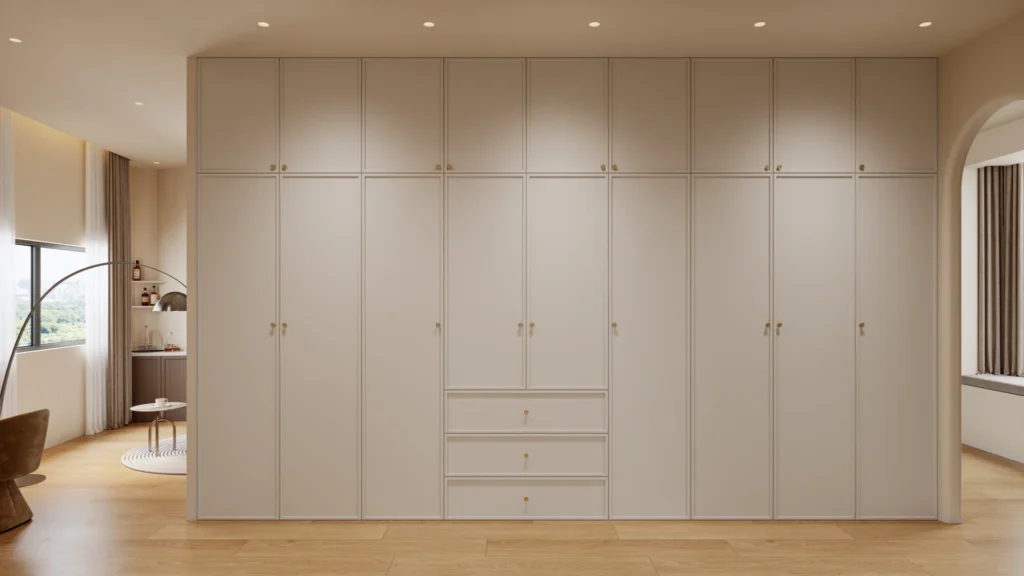
Floor-to-ceiling cabinetry can maximize storage capacity while creating a clean architectural appearance. Upper cabinets can be reserved for seasonal clothing, bedding, luggage and other items that are not used every day.
However, high-level storage should be carefully planned. Frequently used items should remain within easy reach, while less frequently accessed storage can be placed higher.
For a large Luxury Villa Interior Design project, the proportions of floor-to-ceiling wardrobes should also be coordinated with doors, wall panels and other architectural elements.
6. Integrate Lighting Into the Wardrobe
Lighting is one of the most important elements of a high-end walk-in wardrobe.
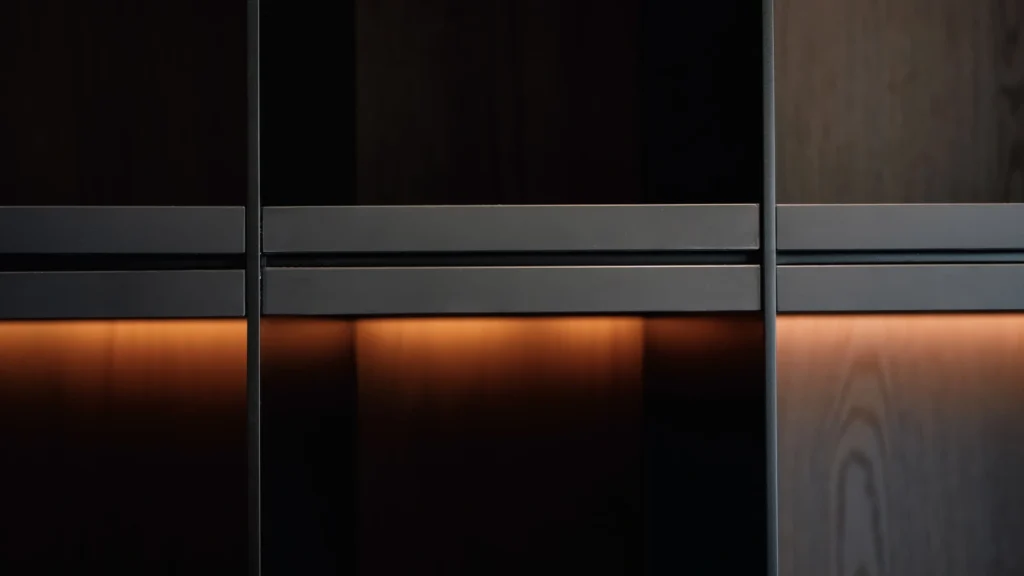
A well-designed lighting system should provide sufficient illumination for clothing and accessories without creating harsh shadows or excessive glare. General ceiling lighting can be combined with integrated cabinet lighting, display lighting and accent lighting.
MRETTY uses a 45-degree angled lighting detail designed to create a concealed lighting effect, allowing the light source to remain visually discreet while illuminating the cabinet interior.
Lighting can also be used to highlight glass display sections for handbags, watches, jewelry or other personal collections. In this way, lighting becomes part of both the functionality and atmosphere of the wardrobe.
7. Choose Materials That Match the Villa’s Interior
The walk-in wardrobe should not feel like an isolated storage room. Its materials and finishes should relate to the overall design of the villa.
Natural wood veneer is a popular choice for luxury wardrobe interiors because it adds warmth and texture. MRETTY uses Grade A American imported wood veneer with a thickness of 60 microns for selected applications.
For painted cabinetry, Sherwin-Williams or Italian ICA water-based paint options can provide different color possibilities. MRETTY also offers more than 30 melamine board colors together with private color customization.
For a modern villa, warm wood tones can soften minimalist architecture, while darker finishes can create a more sophisticated dressing environment.
8. Pay Attention to Cabinet Construction
A walk-in wardrobe may look simple from the outside, but its internal construction has a major impact on long-term performance.
MRETTY’s cabinet systems use a shared-side-panel structure, grooved back-panel construction and rear reinforcement bars. Lamello concealed joint construction is used to reduce the visual impact of conventional exposed connections.
The cabinet system generally uses 22mm boards and imported OSB as the cabinet substrate, providing a substantial structural foundation for large-scale wardrobes.
For a large villa wardrobe, these structural details are particularly important because floor-to-ceiling cabinetry and wide cabinet sections can place greater demands on the overall construction.
9. Select High-Quality Hardware
Hardware is one of the most frequently used parts of a walk-in wardrobe, so it should be selected carefully.
MRETTY uses Austrian Blum full-extension undermount soft-close drawer systems, allowing drawers to open smoothly while providing greater access to the internal storage area.
For cabinet doors, Austrian imported Blum integrated soft-close hinges and Italian Salice integrated soft-close hinge solutions are available. Selected configurations are designed for up to 200,000 opening and closing cycles and can be provided with corresponding lifetime warranty options.
For hanging areas, customized HIGOLD leather wardrobe rails with metal bases provide both practical support and a refined appearance.
In a luxury walk-in wardrobe, these small hardware details can have a significant impact on everyday usability.
10. Plan Shoe, Handbag and Accessory Storage
Clothing is only one part of a modern wardrobe. Shoes, handbags, watches, jewelry, belts and other accessories often require dedicated storage.
Adjustable shelving can provide flexibility for different shoe sizes, while display sections can be designed for handbags and special accessories. Drawers with internal organizers can be used for jewelry, watches and smaller items.
For valuable or delicate items, enclosed glass display cabinets may provide better protection while still allowing the collection to remain visible.
The goal is to avoid placing all accessories into generic drawers. Dedicated storage can make the wardrobe easier to organize and more enjoyable to use.
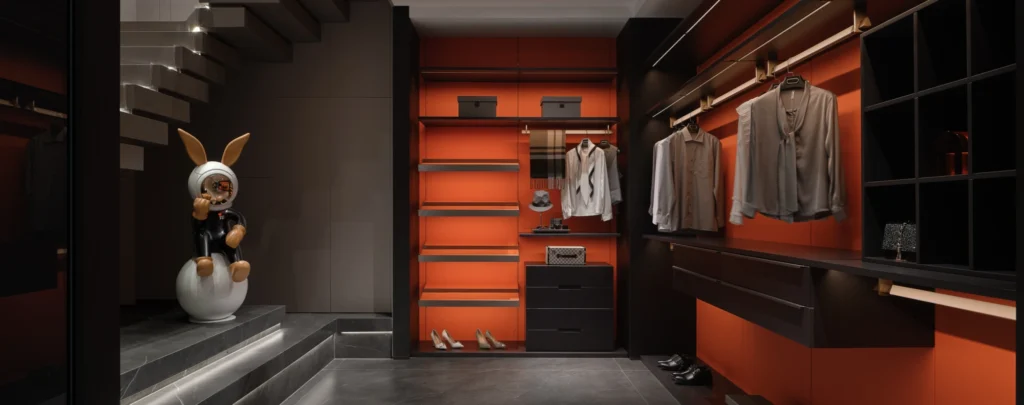
11. Consider Visibility and Display
A luxury walk-in wardrobe can function as both a storage area and a personal display space.
Glass doors, open shelving and integrated lighting can create dedicated display areas for handbags, shoes, watches or fashion collections. At the same time, everyday clothing can remain behind closed doors to maintain a cleaner visual appearance.
The balance between open and closed storage should reflect the homeowner’s lifestyle. Too much open storage can create visual clutter, while too much concealed storage may reduce accessibility.
A combination of both usually provides the most practical result.
12. Think About Ventilation and the Room Environment
Because a walk-in wardrobe contains a large quantity of clothing and textiles, the room environment should also be considered during planning.
Adequate ventilation can help maintain a comfortable environment, while appropriate spacing between cabinets and walls can support air circulation. If the wardrobe is connected directly to a bathroom, the transition between the two spaces should also be carefully designed.
For villa projects, storage design should therefore be coordinated with architectural services and the overall interior environment rather than treated as a standalone furniture installation.
13. Coordinate the Wardrobe With the Bedroom and Bathroom
A luxury walk-in wardrobe often sits between the bedroom and bathroom, making it an important part of the overall private suite.
Instead of treating the three areas independently, the materials, colors and architectural details can be coordinated. For example, the same wood veneer can be used for the bedroom cabinetry and wardrobe, while matching wall panels and doors can extend the visual language into the bathroom.
This integrated approach creates a more sophisticated Whole Home Design and allows the private areas of the villa to feel like one continuous environment.
What Makes a Luxury Walk-In Wardrobe Different?
A luxury walk-in wardrobe is not defined simply by its size or the number of cabinets it contains. Its quality comes from how effectively the space combines storage, accessibility, materials, lighting, hardware and design.
A well-designed wardrobe should make it easy to find belongings, comfortable to use and visually consistent with the surrounding architecture. Every drawer, shelf, hanging section and lighting detail should have a purpose.
For this reason, Custom Furniture is particularly valuable in villa projects. The wardrobe can be designed around the homeowner rather than requiring the homeowner to adapt to a standard product.
MRETTY Custom Walk-In Wardrobes for Luxury Villas
MRETTY provides premium Walk-In Wardrobe, Custom Cabinets and Whole Home Design solutions for Luxury Villas, Landed Houses and high-end residential properties.
Its wardrobe solutions combine customized cabinet dimensions, premium materials, concealed lighting, refined hardware and personalized internal storage. These systems can also be coordinated with Bespoke Kitchen, Living Room Cabinetry, Bathroom Vanity, Dining Cabinetry and Door & Wall Systems to create a consistent design language throughout the home.
From initial space planning and original design to custom manufacturing and professional installation, MRETTY focuses on creating a complete residential environment rather than simply supplying individual cabinets.
Conclusion
Designing a walk-in wardrobe for a villa requires more than deciding how many cabinets are needed. The room layout, wardrobe collection, storage zones, vertical space, island configuration, lighting, materials, hardware, ventilation and relationship with the bedroom and bathroom should all be considered together.
For a Luxury Villa or Landed Property, a thoughtfully designed walk-in wardrobe can become much more than a storage room. It can function as a private dressing environment that combines organization, craftsmanship and interior design.
Planning a walk-in wardrobe for your villa? Contact MRETTY to create a bespoke wardrobe system tailored to your space, collection and lifestyle.