
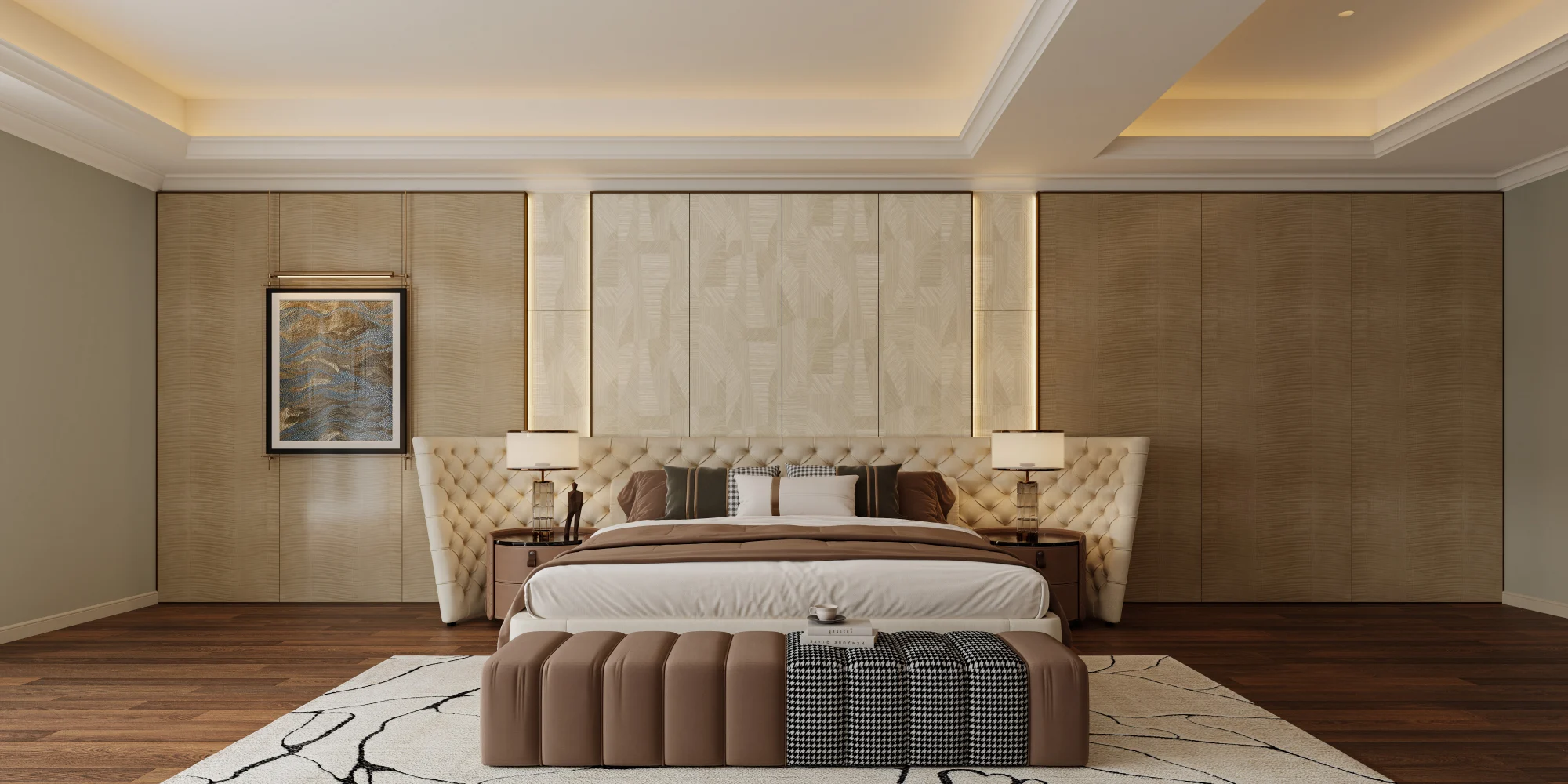
What Is Mixed-Oil Finishing in Luxury Custom Cabinetry?
What Is Mixed-Oil Finishing?
Mixed-oil finishing generally refers to a finishing approach that combines the visual or penetrating characteristics associated with oil-based finishing with other coating components to achieve a specific appearance and level of surface performance.
In traditional woodworking, oil-based finishes can penetrate the wood and emphasize its natural grain. Oil-and-varnish blends, for example, can combine penetration and grain enhancement with a thin protective film. WOOD Magazine notes that these blended finishes can create a hand-rubbed appearance while enhancing the character of the wood.
However, the term “mixed-oil finishing” can describe different systems depending on the manufacturer, coating formulation, and production process. It should therefore not be understood as one universal chemical formula. In professional cabinet manufacturing, the exact coating system should always follow the coating manufacturer’s technical specifications.
For reference, WOOD Magazine’s guide to oil/varnish blends explains how oil and varnish components can work together to enhance grain while creating a light surface film.
Why Is Finishing So Important in Luxury Cabinetry?
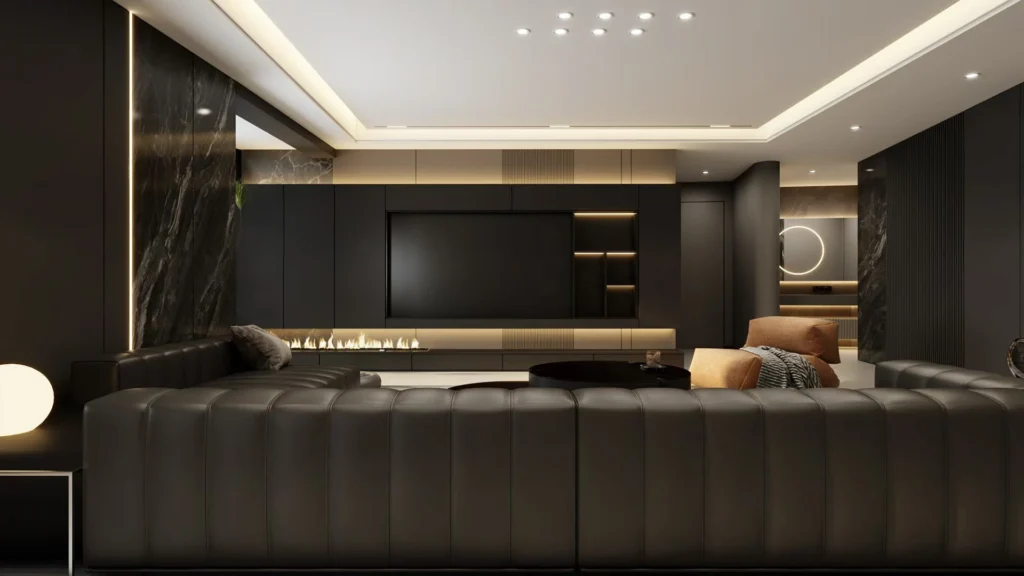
Luxury cabinetry is often evaluated by details that are easy to overlook at first glance: surface smoothness, color consistency, depth, grain clarity, tactile quality, edge treatment, and how the finish responds to everyday use.
A high-quality finish should therefore achieve more than an attractive color. It should support the overall performance and visual character of the cabinet.
- Grain definition: The finishing system should enhance rather than hide the natural character of the wood.
- Color depth: Multiple finishing stages can create a richer and more dimensional appearance.
- Surface smoothness: Proper preparation and sanding help create an even tactile surface.
- Consistency: Large cabinet panels require controlled application to maintain a consistent appearance.
- Durability: The final coating system should be appropriate for the intended application and level of use.
- Long-term appearance: The finish should maintain its intended visual character under normal indoor conditions.
Modern wood-coating manufacturers offer dedicated systems for furniture and cabinetry, including sealers, primers, stains, oils, and topcoats. Sherwin-Williams’ furniture coating systems, for example, are designed around different stages of wood finishing and surface performance.
How Does Mixed-Oil Finishing Work?
The exact process varies according to the substrate, veneer, coating system, color requirements, and desired surface effect. In high-end custom cabinetry, however, surface preparation remains one of the most important stages.
1. Surface Preparation
The wood or veneered panel is first inspected and prepared. Dust, contaminants, surface defects, and irregularities must be addressed before finishing begins.
This stage is particularly important for natural veneer because variations in grain and porosity can affect how the finish absorbs and reflects light.
2. Defect Repair
Minor surface imperfections are repaired before sanding and coating. The objective is not simply to make the surface look smooth, but to establish a stable foundation for the subsequent finishing layers.
3. Precision Sanding
Sanding controls the surface texture and helps prepare the substrate for coating. For veneered panels, sanding must be carefully controlled because excessive sanding can damage or penetrate the veneer.
This is one reason veneer thickness matters in premium cabinetry. A thicker natural veneer can provide greater tolerance during finishing and refinishing operations.
4. Primer or Base-Coat Application
The base coating helps establish the foundation of the final finish. Depending on the selected system, it can improve surface uniformity, filling, adhesion, and the visual depth of subsequent layers.
Professional coating manufacturers provide different primers, sealers, and surfacers for wood furniture and cabinetry. Sherwin-Williams, for example, offers dedicated wood sealers and primers designed to create a smooth foundation for subsequent coatings.
5. Intermediate Sanding
After the coating has dried or cured according to its technical requirements, the surface is carefully sanded again. This stage helps remove minor irregularities and prepares the surface for the next layer.
6. Color and Finish Development
The finishing system is then built toward the desired color, transparency, sheen, and visual depth. With natural wood, the objective is often to enhance the grain rather than cover it completely.
7. Final Topcoat
The final coating determines much of the surface’s visual and tactile character. Depending on the specification, the final finish may range from low-sheen matte to satin or higher-gloss surfaces.
For luxury cabinetry, the selected sheen should be considered together with lighting, room scale, material palette, and the desired interior design style.
What Makes Mixed-Oil Finishing Different?
One of the defining characteristics of oil-based or oil-containing finishing systems is their ability to interact visually with the wood grain. Rather than creating a completely opaque surface, they can emphasize natural variation and produce greater visual depth.
Oil/varnish blends are commonly associated with a combination of wood penetration and a thin surface film. According to WOOD Magazine, these finishes can enhance grain and create a hand-rubbed appearance, although their level of protection can differ significantly from more heavily film-forming coating systems.
For this reason, professional cabinet finishing should not be reduced to choosing between “oil” and “paint.” The complete coating system—including primer, sealer, color, topcoat, curing conditions, and application method—determines the final performance.
Mixed-Oil Finishing vs. Other Cabinet Finishes
| Finish Type | Visual Character | Typical Advantage | Key Consideration |
|---|---|---|---|
| Mixed-Oil Finish | Warm, natural and grain-enhancing | Highlights wood character | Requires careful system selection |
| Spray Finish | Even and highly controlled | Consistent surface coverage | Requires controlled application conditions |
| Wipe Finish | Natural and tactile | Allows detailed hand application | Application consistency is important |
| Brush Finish | Can range from natural to textured | Flexible for certain applications | Brush marks must be carefully controlled |
These methods are not necessarily competing technologies. A sophisticated custom cabinetry manufacturer may use different application techniques and coating systems depending on the material, design specification, production requirements, and desired result.
Why Does Wood Grain Matter in Luxury Cabinetry?
One of the main reasons premium interiors use natural veneer is its ability to introduce organic variation into architectural surfaces.
Unlike a uniform solid color, natural wood contains differences in grain direction, figure, tone, and density. A well-designed finishing system should work with these characteristics rather than attempting to eliminate them.
This becomes particularly important when large wardrobe doors, kitchen fronts, wall panels, or full-height cabinetry are used across an interior. Grain direction and color continuity can significantly influence the visual rhythm of the space.
Explore MRETTY’s Craft & Material approach to see how material selection and craftsmanship are integrated into bespoke interior solutions.
Why Does MRETTY Focus on a Controlled Finishing Process?
For high-end custom cabinetry, consistency is difficult to achieve without a standardized process. Every panel needs to move through the same fundamental stages of preparation, coating, sanding, inspection, and finishing.
MRETTY’s high-end painted panels follow a 4-coat primer and 3-coat finish process. Compared with simpler one-primer-and-one-finish approaches, the additional finishing stages are designed to improve filling, surface depth, visual clarity, and overall refinement.
The objective is not simply to add more layers. Each layer has a role within the complete finishing system, and the surface needs to be properly prepared between stages.
This approach reflects a broader principle of luxury craftsmanship: the quality of the final surface depends on the quality and consistency of every stage beneath it.
Learn more about MRETTY’s painting technology and material craftsmanship.
Is Mixed-Oil Finishing Suitable for Every Cabinet?
Not necessarily.
The appropriate finishing system depends on the material, location, usage, desired appearance, maintenance requirements, and performance specifications.
For example, kitchen cabinetry may require greater resistance to moisture, abrasion, cleaning agents, and frequent handling than decorative wall panels. A wardrobe door may prioritize tactile quality and visual warmth, while a high-use kitchen surface may require a more robust protective coating system.
Sherwin-Williams provides dedicated coating technologies for furniture and kitchen cabinetry, including oils, sealers, stains, primers, and topcoats, illustrating why coating selection should be matched to the specific application.
For a deeper understanding of coating technologies, see Sherwin-Williams’ overview of oil and wax coatings for wood.
What Should You Ask Before Choosing a Cabinet Finish?
When specifying a finish for luxury custom cabinetry, homeowners, designers, and architects should consider more than color alone.
- What type of wood or veneer will be used?
- Is the veneer natural, dyed, smoked, or engineered?
- How transparent should the finish be?
- Should the natural grain remain highly visible?
- What level of gloss is required?
- How much daily wear will the cabinetry receive?
- Will the cabinetry be exposed to moisture or heat?
- What level of surface hardness and chemical resistance is required?
- How will the coating be maintained over time?
- Does the manufacturer have a defined quality inspection standard?
Environmental considerations should also be included in professional finishing specifications. The U.S. Environmental Protection Agency has documented the relationship between wood-furniture finishing operations and VOC emissions, making coating selection and controlled application important considerations for responsible manufacturing.
See the U.S. EPA guidance on VOC emissions from wood furniture finishing for additional technical background.
Mixed-Oil Finishing as Part of a Complete Craftsmanship System
In luxury custom cabinetry, no single finishing technique defines quality on its own. The final result comes from the relationship between the substrate, veneer, preparation, coating system, application technique, curing conditions, inspection, and installation.
Mixed-oil finishing can contribute a warm, natural, and tactile character to wood surfaces, particularly when the objective is to preserve and enhance the visual identity of the material. However, achieving a truly refined result requires professional control of the entire finishing system.
For MRETTY, this philosophy extends beyond painting. From custom kitchen cabinetry and bespoke wardrobes to wall systems and whole-home solutions, craftsmanship is treated as an integrated part of the design process.
Conclusion
Mixed-oil finishing is more than a decorative treatment. In the context of luxury custom cabinetry, it represents an approach to enhancing wood’s natural character while creating a refined and tactile surface.
The most important consideration is not simply whether a finish contains oil, but whether the entire finishing system is appropriate for the material, application, environment, and desired performance.
When combined with carefully selected veneer, high-quality substrates, controlled sanding, multiple coating stages, precise application, and rigorous inspection, the finishing process becomes an essential part of the craftsmanship behind luxury bespoke cabinetry.
For homeowners, architects, and interior designers seeking a more refined approach to luxury custom cabinetry, understanding the finishing process is one of the best ways to distinguish a genuinely high-quality product from a surface that simply looks good at first glance.